Ever stared at your phone unlocking with your face and thought: “ How technology made a gadget work smartly? Or how a machine makes these decisions automatically within seconds ?” If that thought ever crossed your mind, buckle up. Computer Vision is no longer a fancy technology term. It is the secret sauce behind today’s most brilliant innovations.
From self-driving cars that read every sign to medical tools that catch diseases early, it’s turning science fiction into everyday reality. But here’s the top-notch question everyone keeps asking: Is Computer Vision Machine Learning? Let’s break it down, human-to-human, and uncover how these two powerhouse technologies work hand in hand.
Real Science Behind Computer Vision:
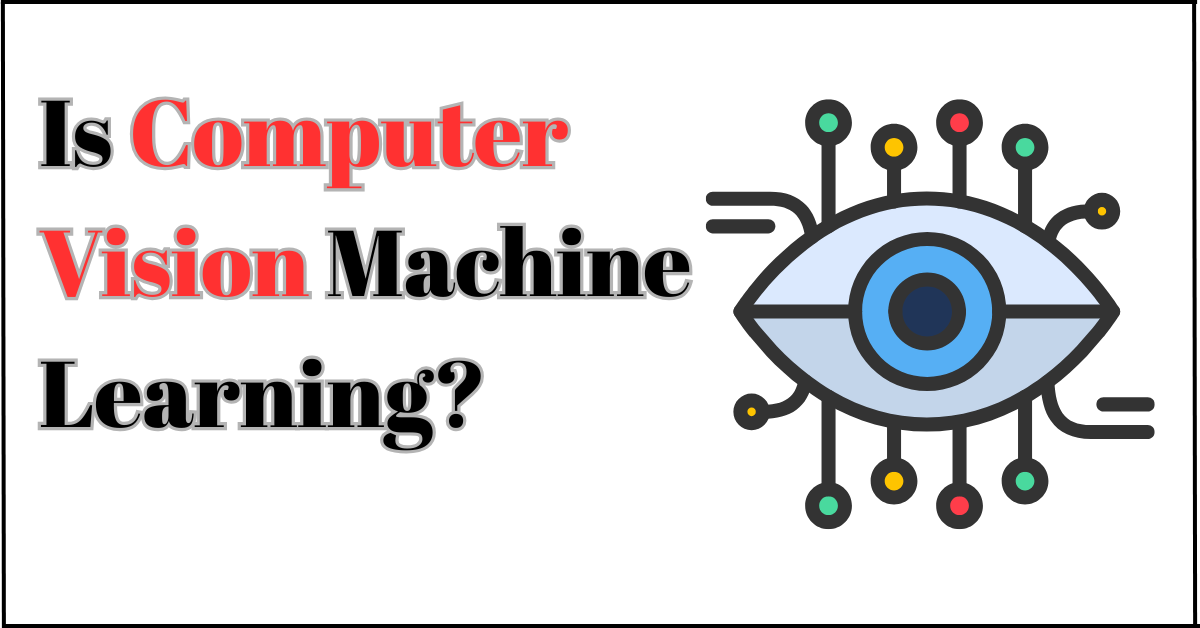
Computer Vision (CV) is the art and science of teaching machines to interpret visual data. But does that mean it is Machine Learning (ML)? Well, not entirely. But in most modern systems, they are practically indistinguishable.
Old-school CV depended on rigid, rule-based methods like edge detection or geometric modelling. The problem? Real-world visuals are chaotic, messy, unpredictable. Those brittle rules fell apart fast. Then came Machine Learning, and everything changed.
Today, most Computer Vision systems heavily rely on Machine Learning, especially deep learning, to understand patterns, identify objects, classify images, and decode motion. ML does not just give CV instructions. It gives it intuition. It teaches machines how to “see” the world, pixel by pixel.
This is where the famous debate: computer vision vs machine learning comes in. It is not a rivalry; in fact, it is teamwork. ML acts like the brain, while CV acts like a soul that connects with the world. With their combo, they create intelligence within the systems.
A classic computer vision example is face recognition. The camera captures your image (CV), and ML determines if it matches stored data. Or think of self-driving cars recognizing pedestrians. CV identifies objects, and ML predicts behavior.
So yes, Computer Vision is not automatically ML. But in today’s tech world, CV powered by ML is the standard, which empowers you with the fastest, accurate, and incredibly powerful.
Explanation of Computer Vision Process (Step-By-Step Guide):
How machines work so realistically, let’s walk through the computer vision process: a step-by-step pipeline that converts raw visuals into intelligent actions.
- Image Acquisition:
Everything starts with capturing data like cameras, scanners, sensors, or drones. It is the machine’s first look at the world. - Preprocessing:
Just as cleaning a foggy lens, preprocessing enhances the raw image. Noise reduction, resizing, and normalization are steps to prep visuals for better analysis. - Feature Extraction:
Traditionally, CV manually extracts edges , shapes and combines them to make a suitable content idea . But modern systems depend on ML and intensive deep learning to automatically learn features that matter. - Model Judgement:
How a system thinks with human intelligence, this is where the thinking stage comes in.ML models classify objects, detect fingerprints, track your step count, or segment images. This is where intelligence shines. - Decision-Making:
Finally, the system acts, flagging anomalies, steering robots, and diagnosing medical scans.
From factory automation to retail analytics, this process boosts the speed of today’s most advanced computer vision applications. It blends mathematical steps with a machine learning algorithm, which makes the CV system grow smarter with every date entry. This is how CV becomes unstoppable. Because it learns , adapts and evolves eventually.
Real-World Applications of Computer Vision:
Computer Vision is not just limited to one industry , it is everywhere. These computer vision applications are quietly shifting the industries, speeding up the efficiency, and rewriting what is possible.
1. Healthcare:
CV helps in detecting our location. Classify X-rays and analyze patient scans with jaw-dropping accuracy. Think of it as a digital superhero assisting doctors.
2. Autonomous Vehicles:
Automated vehicles use CV to detect road lanes, signboards, pedestrians, and obstacles without any confusion. When you pair that with ML, suddenly you have intelligent decision-making on wheels.
3. Retail & E-Commerce:
There is a time when world use scan-and-go option era. Now, the world is all about visual product searches. CV is reshaping shopping experiences. Brands analyze shelves and customer movement through CV powered tools.
4. Agriculture:
Drones are equipped with CV to detect plant diseases, measure crops productivity and health and optimize irrigation with proper calculations. Ultimately, this saves farmers time, money, and stress.
5. Security & Surveillance:
Easily face recognition, crowd analysis, and anomaly detection make modern surveillance faster and sharper. Through these easiness, crime rates come down.
6. Social Media & Content Platforms:
Photos with filter , automatic tagging , and content moderation make user experiences smoother and brighter.
A standout computer vision example is? Google Photos automatically groups face. It’s fast, accurate, and easily impressive.
Across all these domains, Machine Learning continues to improve accuracy and adaptability. It is making Computer Vision more effective every day.
Relation Between Computer Vision and AI:
One question always pops up in the tech industry: “Is computer vision AI?” We have to zoom out on this question.
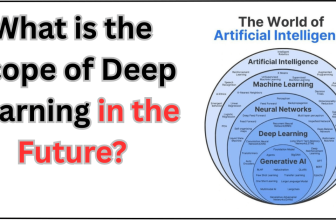
AI is the giant umbrella. Machine Learning is a branch under that umbrella. Deep Learning sits beneath ML. And Computer Vision depends on all three.
When CV uses plain and rule methods, it overlaps with the field of classical AI. But today’s CV uses ML algorithms and deep learning models, making it a full-fledged member of the AI family.
Think of it this way:
- AI is the visionary.
- ML is the thinker.
- CV is the critical observer.
They create intelligent systems that see, analyze, and act accordingly. Modern CV relies heavily on neural networks. These models detect patterns, textures, edges, and objects with amazing accuracy. CV is shrinking the gap between computer vision vs machine learning more than ever by quickly understanding the patterns.
This combination builds systems that analyze medical scans, steer cars, moderate online content, and so much more. It is intelligence with vision, scaled globally.
FAQ’s:
What is meant by Computer Vision?
Computer Vision is a field of AI that empowers machines to understand and interpret visual data, such as videos or images. It copies human sight and helps systems to identify patterns, objects, and environments.
Is CV a part of ML?
Yes. Early CV did not depend on ML. But modern computer vision solutions depend almost entirely on Machine Learning and deep learning. It delivers amazing results with precision, speed, and accuracy.
What are the four types of Machine Learning?
There are four types of machine learning:
- Supervised Learning.
- Unsupervised Learning.
- Semi-Supervised Learning.
- Reinforcement Learning.
4) Is Computer Vision really a part of AI?
Yes. Computer Vision is a branch of Artificial Intelligence. It empowers machines to understand. It boosts their thinking, analysis, and decision-making using visual data.
Conclusion:
Computer Vision is really a part of Machine Learning. In most cases today, yes. They work adjacently to build smart, sharp, and more effective systems. From healthcare challenges to automated cars, Computer vision and Machine Learning are combining to drive the future of intelligent transformation. Whether you explore computer vision applications, compare computer vision vs machine learning, or study the computer vision process, one thing is straightforward. Computer Vision is not just evolving. It is transforming industries and reshaping the world as we know it. It is the perfect combination of sight and intelligence.